24 hr
Uluru Day Trip from Alice Springs with Sunset BBQ
- Expert local guide
- Small group
- Skip-the-line access
- Free cancellation
Uluru Tours — Guided Walks, Sunrise Viewing & Park Access
Sandstone catches the first light, the desert holds its silence.
Compare fares, pick the fit — all bookings are mobile-voucher and eligible for free cancellation where shown.
24 hr
2 hr
5 hr
Choosing among Uluru Tours options mostly comes down to how many days you want unlimited bus access and how many Kata Tjuta transfers are bundled in. The single Uluru Return suits a quick stopover, while the multi-day hop-on-hop-off passes suit a slower-paced Uluru NT landmarks itinerary.
| Uluru Return Single transfer |
Top pick 1-2 Day Pass Hop-on-hop-off |
3 Day Pass Extended hop-on-hop-off | |
|---|---|---|---|
| Access level | One return trip only | Unlimited rides over 1-2 days | Unlimited rides over 3 days |
| Kata Tjuta transfers included | None (Uluru only) | One return transfer | Two return transfers |
| Sunrise/sunset access | Choose one departure time | Sunrise and sunset both available | Sunrise and sunset both available |
| Best suited for | Short stopover visitors | Most first-timers wanting flexibility | Multi-day, slower-paced visits |
| Flexibility to hop off multiple times | No — single trip | Yes — unlimited within validity | Yes — unlimited within validity |
| Best for | Time-poor travellers | First-timers | Extended stays |
| See tickets & prices |
Verdict: First-time visitors booking Uluru Tours tickets generally do best with the 1-2 Day Pass, since it pairs unlimited hop-on-hop-off flexibility with a Kata Tjuta transfer, while the Uluru Return suits only a single, time-limited stopover.
Worth it without a car; skippable with one
Every option starts from the same floor: 38 AUD for the adult park pass, valid three consecutive days. What separates Uluru Tours from the alternatives is what sits on top of that. A hop-on-hop-off shuttle loops the base walk trailheads, the sunset viewing areas and Kata Tjuta, so you never negotiate the Lasseter Highway yourself — sensible if you flew into Yulara without a rental. Guided Uluru Tours tours add an Anangu-informed commentary on the rock art, waterholes and Tjukurpa stories that a self-drive simply doesn't give you. A hire car costs more per day for two people but buys total freedom, which matters most in the 06:30–08:30 window when shuttle frequency is thinnest. An Uluru day tour by coach is the weakest value if you already have wheels: you pay a premium to follow someone else's clock around the monolith.
Bottom line: Skip the coach if you've hired a car — otherwise a hop-on-hop-off Uluru Tours ticket is the cheapest way to reach every viewpoint the park pass already paid for.
Hand-picked experiences loved by thousands of travelers
2.5 hours
Free Cancellation
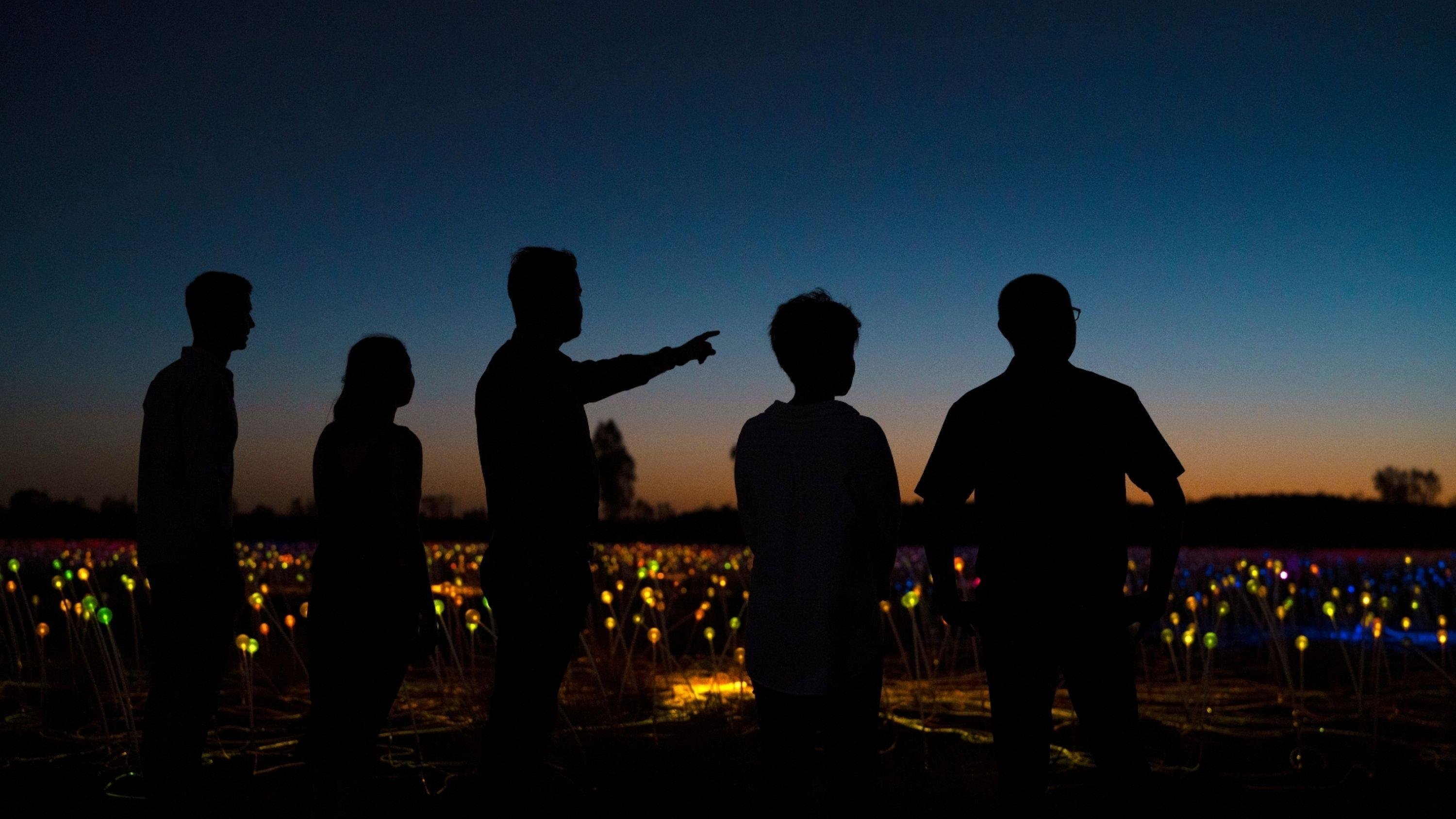
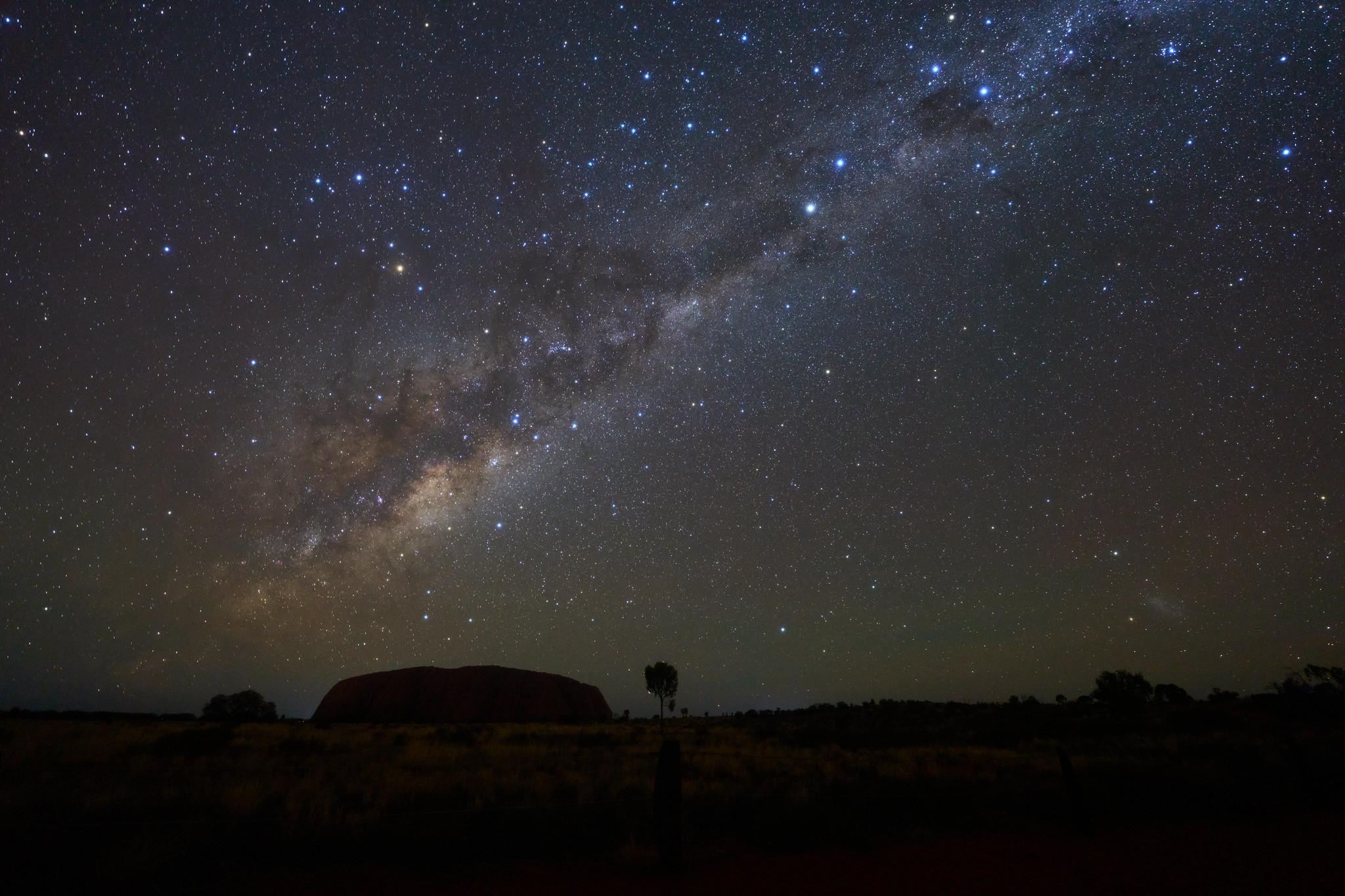
Escape the city lights and explore the outback night sky beside Uluru with expert guides and telescopes.
5 hours
Free Cancellation
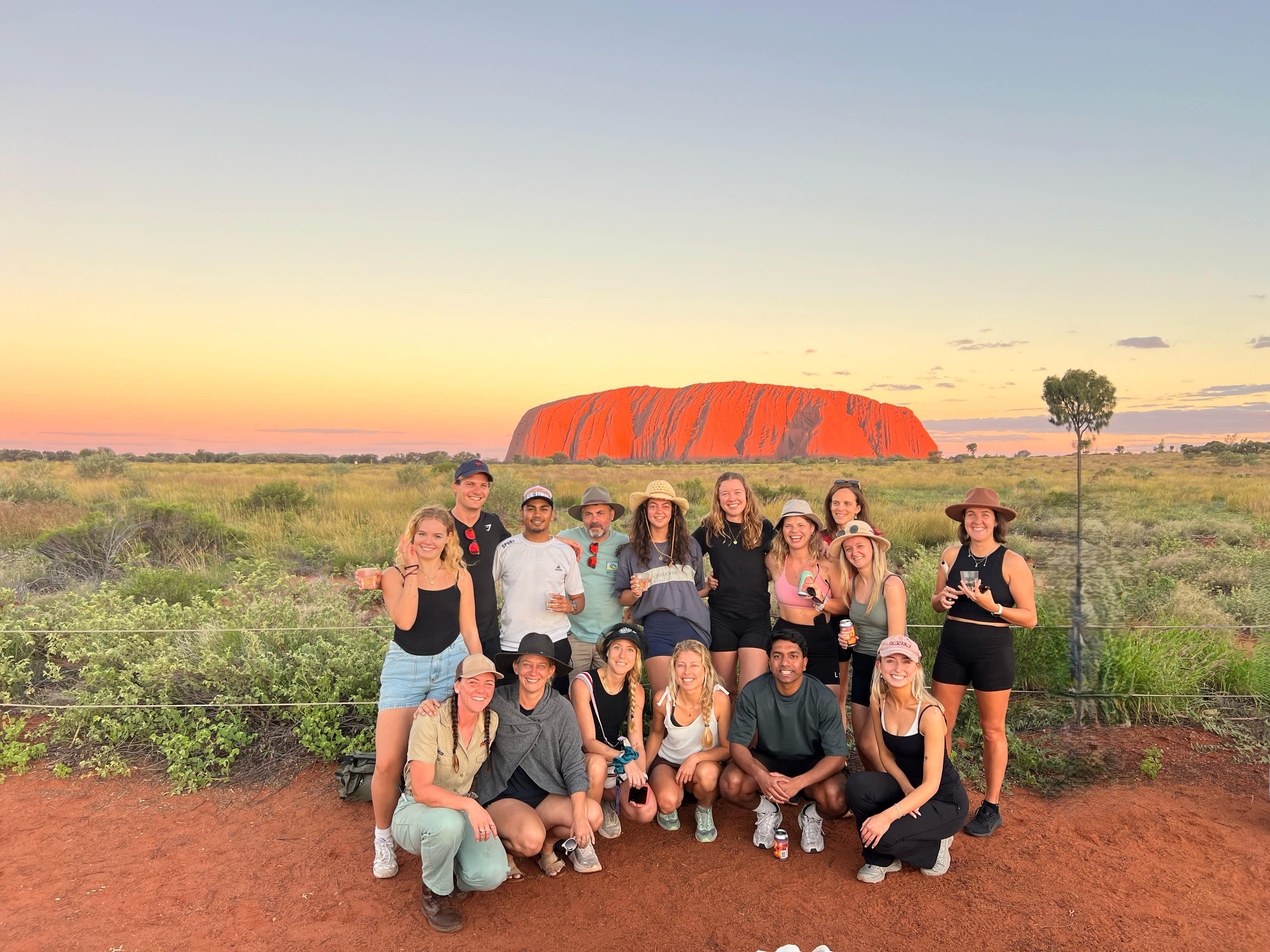
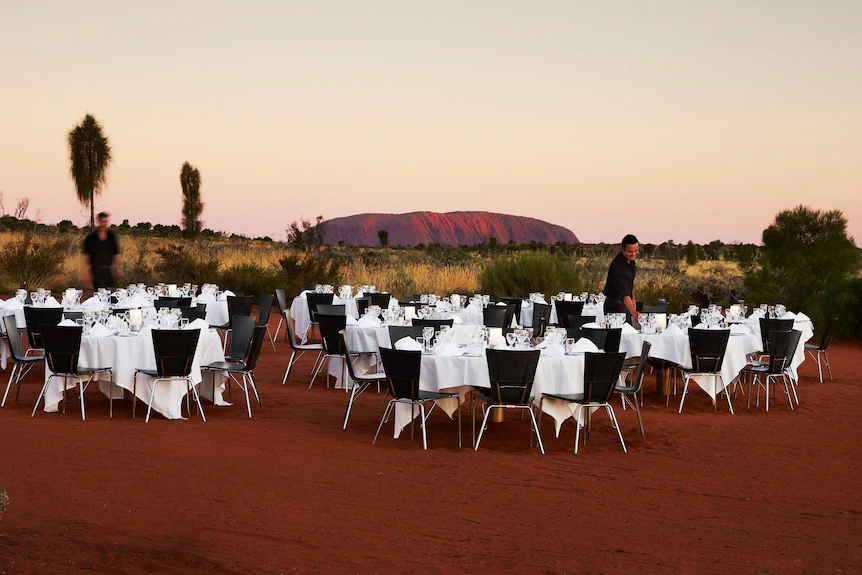
Circle Uluru's base, uncover Aboriginal culture, and toast a desert sunset with wine and nibbles.
5 hours
Free Cancellation
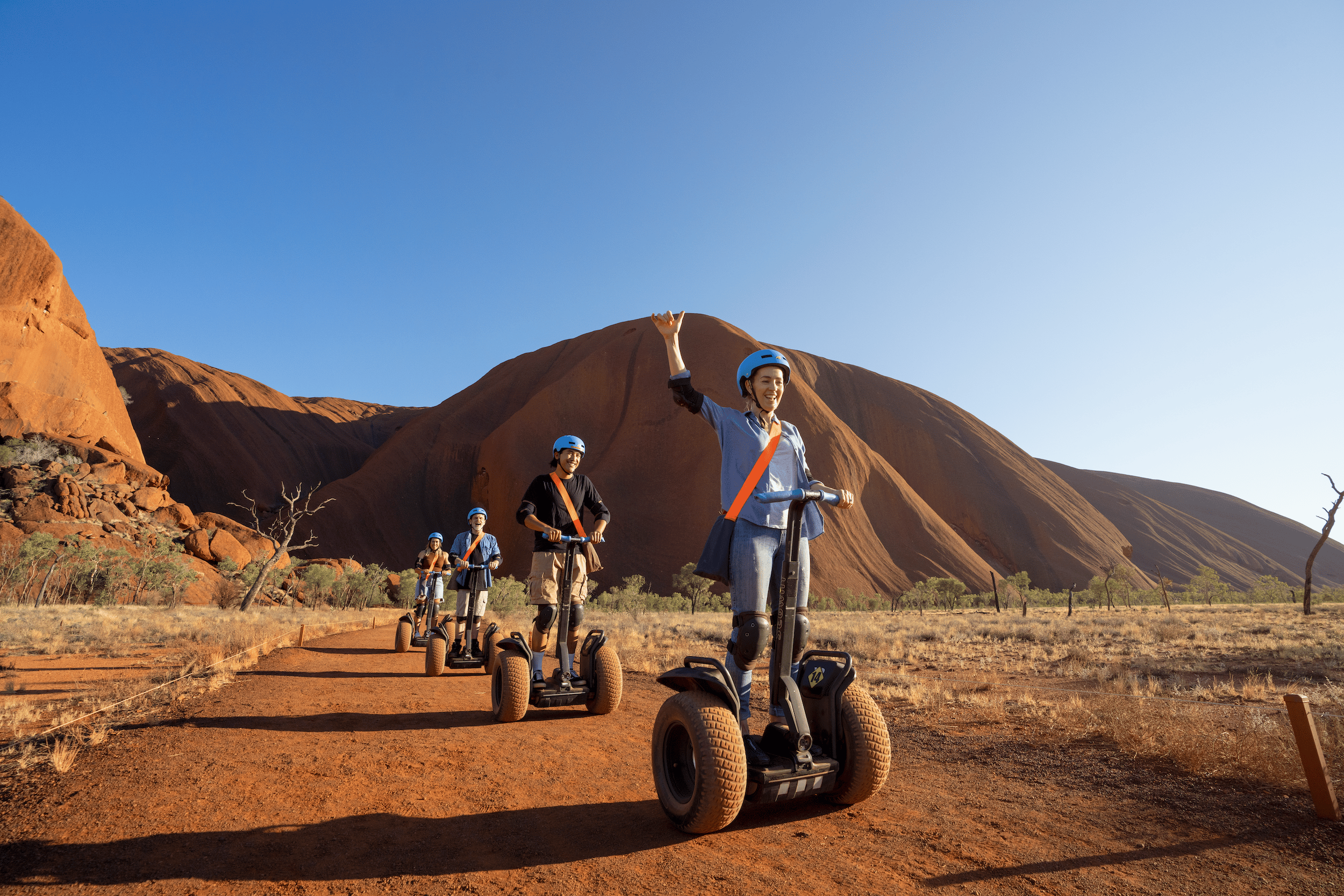
Glide around the base of Uluru at sunrise on a Segway and uncover sacred Anangu culture.
3 days
Free Cancellation
3-day Red Centre camping trip with sunrise/sunset at Uluru, Kata Tjuta walks & Kings Canyon hikes.
4 hours
Free Cancellation
Private half-day sunrise tour of Uluru with a local guide and optional Anangu host from Mutitjulu.
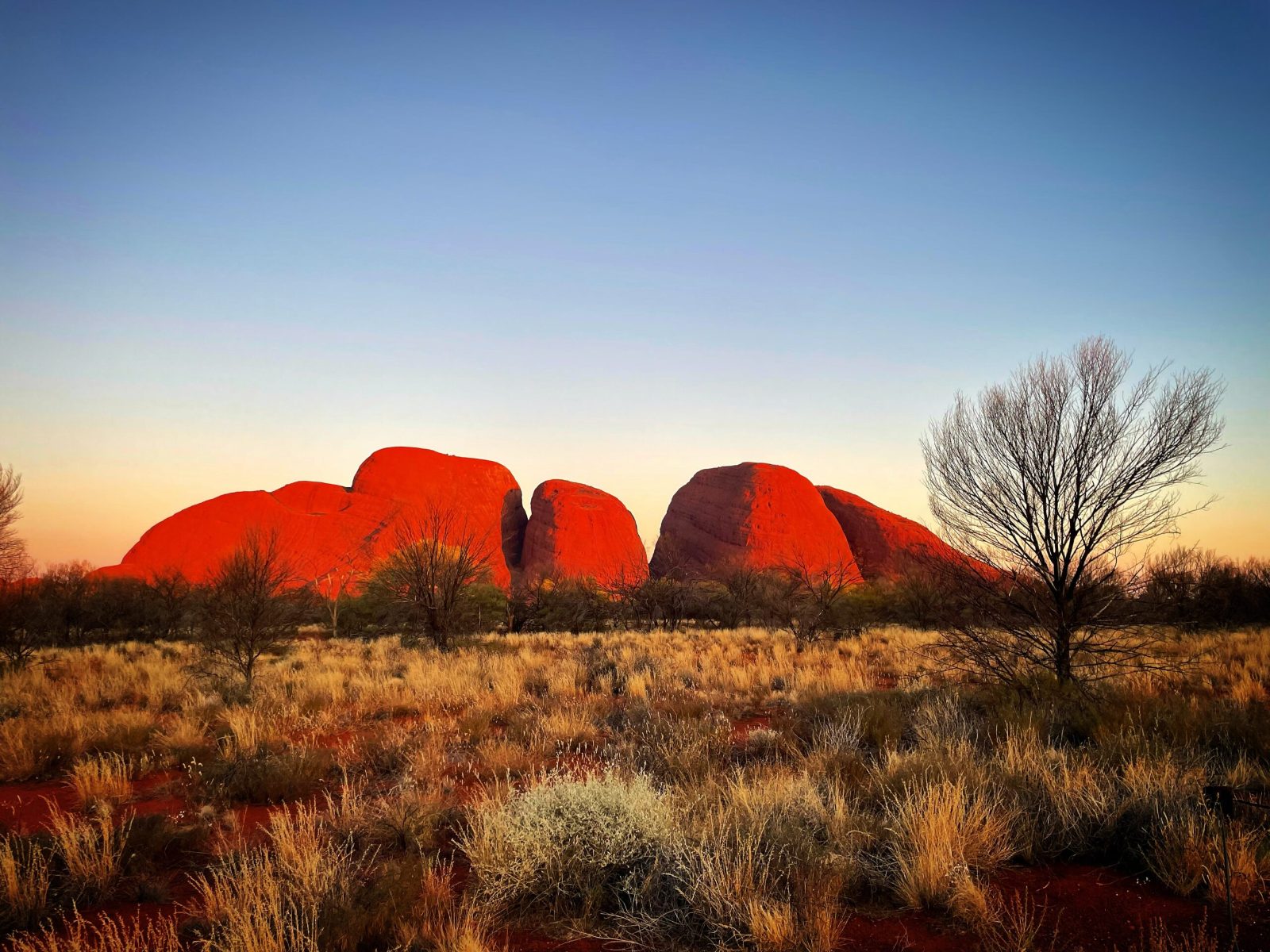
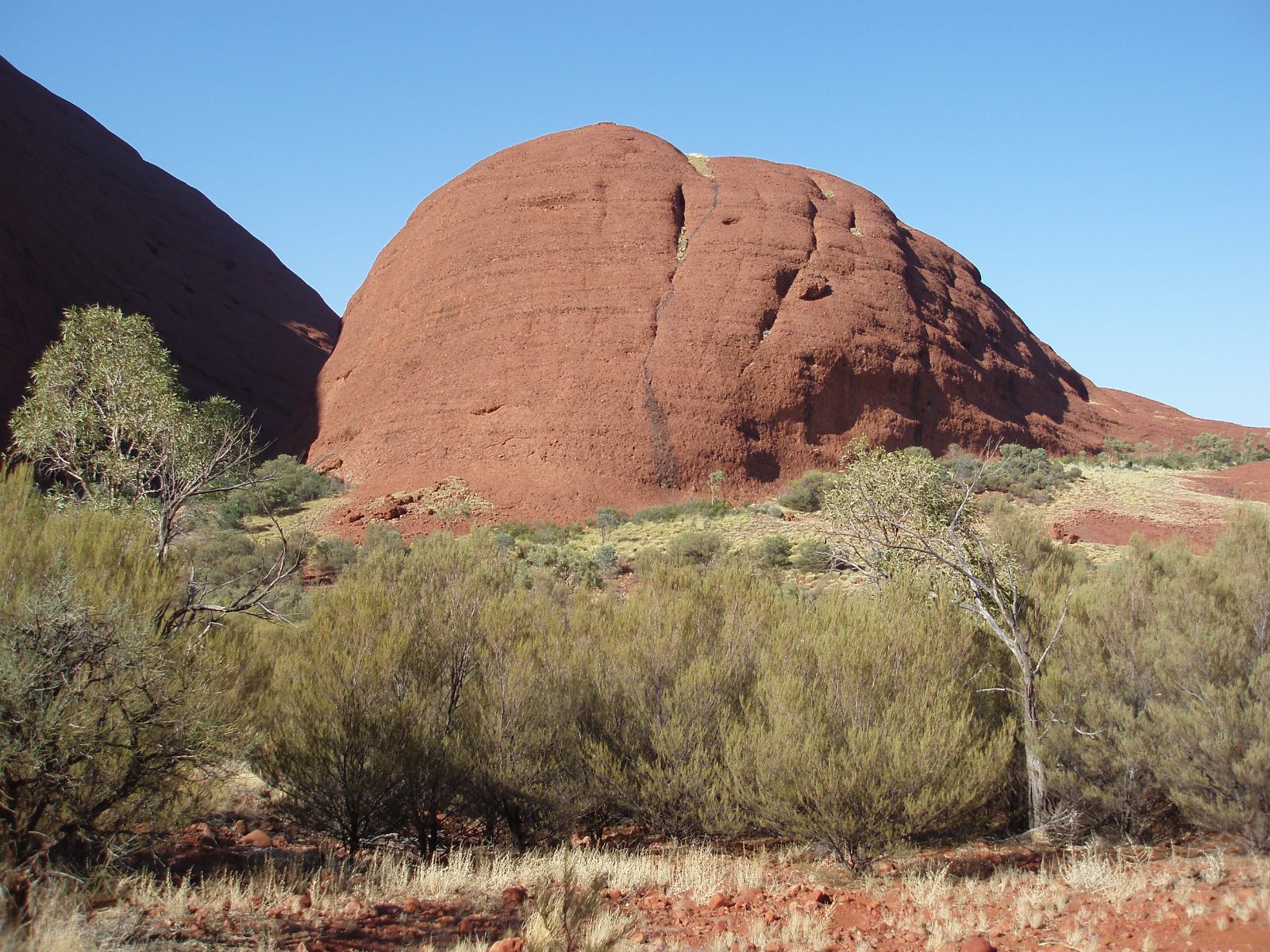
A cluster of 36 conglomerate rock domes located about 45 minutes from Uluru, with the tallest dome, Mount Olga, rising to roughly 500 metres — taller than Uluru's 348 metres. Named by explorer Ernest Giles in 1872, the Pitjantjatjara name Kata Tjuta translates to many heads.
A grade-4, 7.4-kilometre circuit walk through the heart of Kata Tjuta, passing the Karu Lookout at 1.1 kilometres and the more distant Karingana Lookout roughly 2.5 hours further along the track. Sections beyond Karu Lookout close once temperatures reach 36°C, usually by mid-morning in the hotter months.
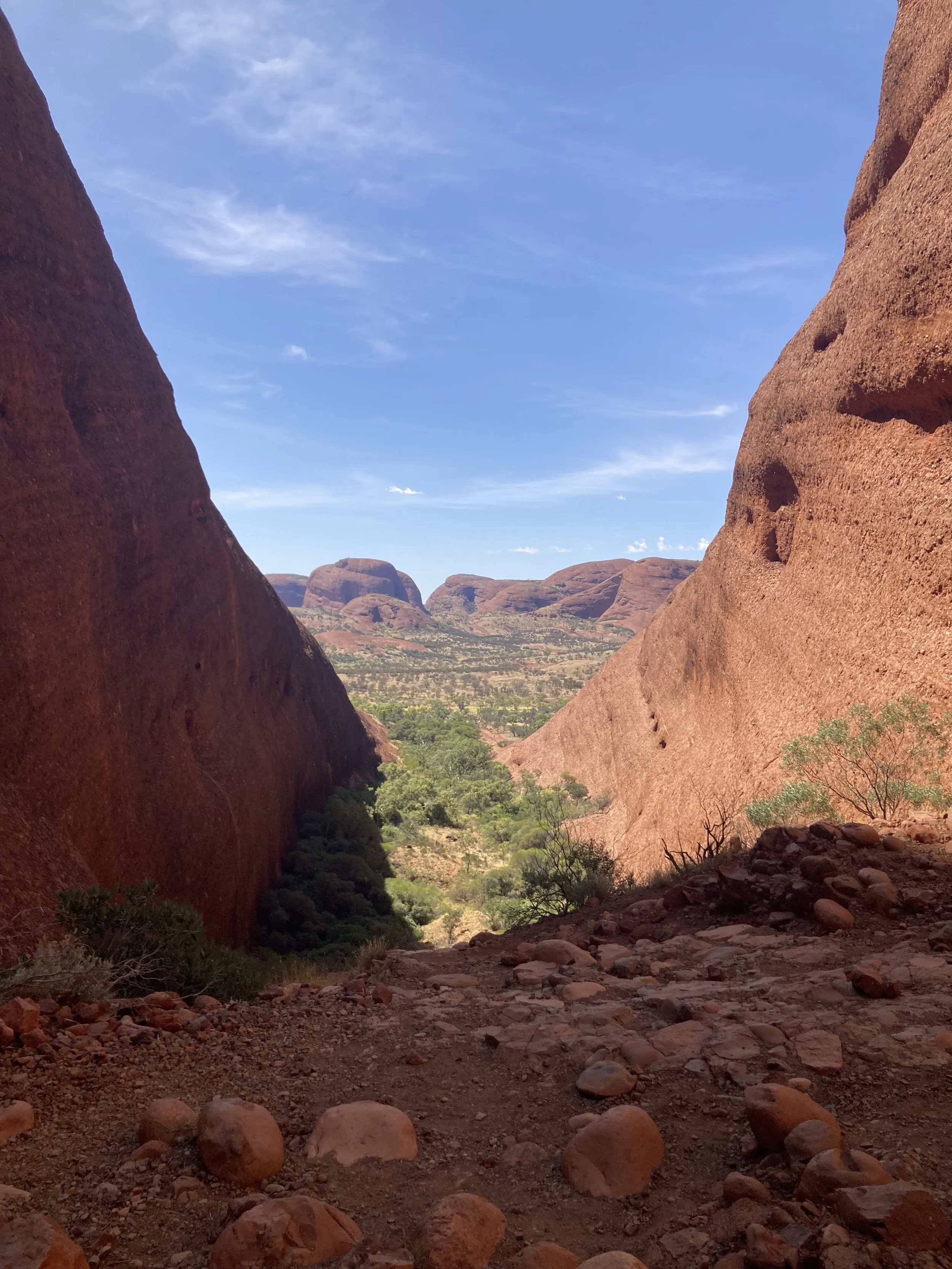
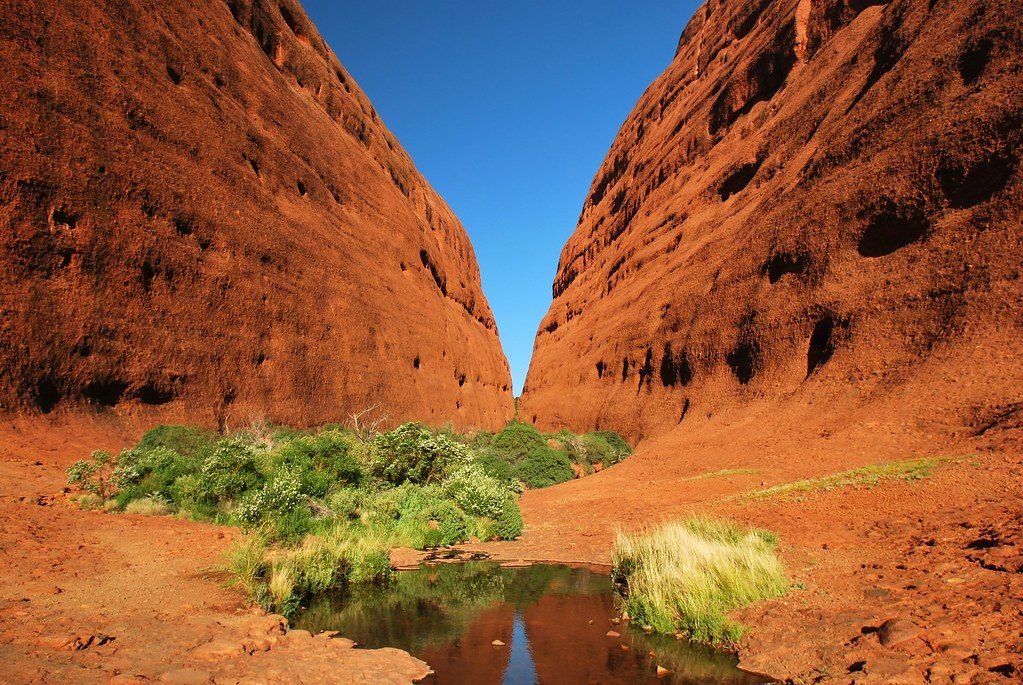
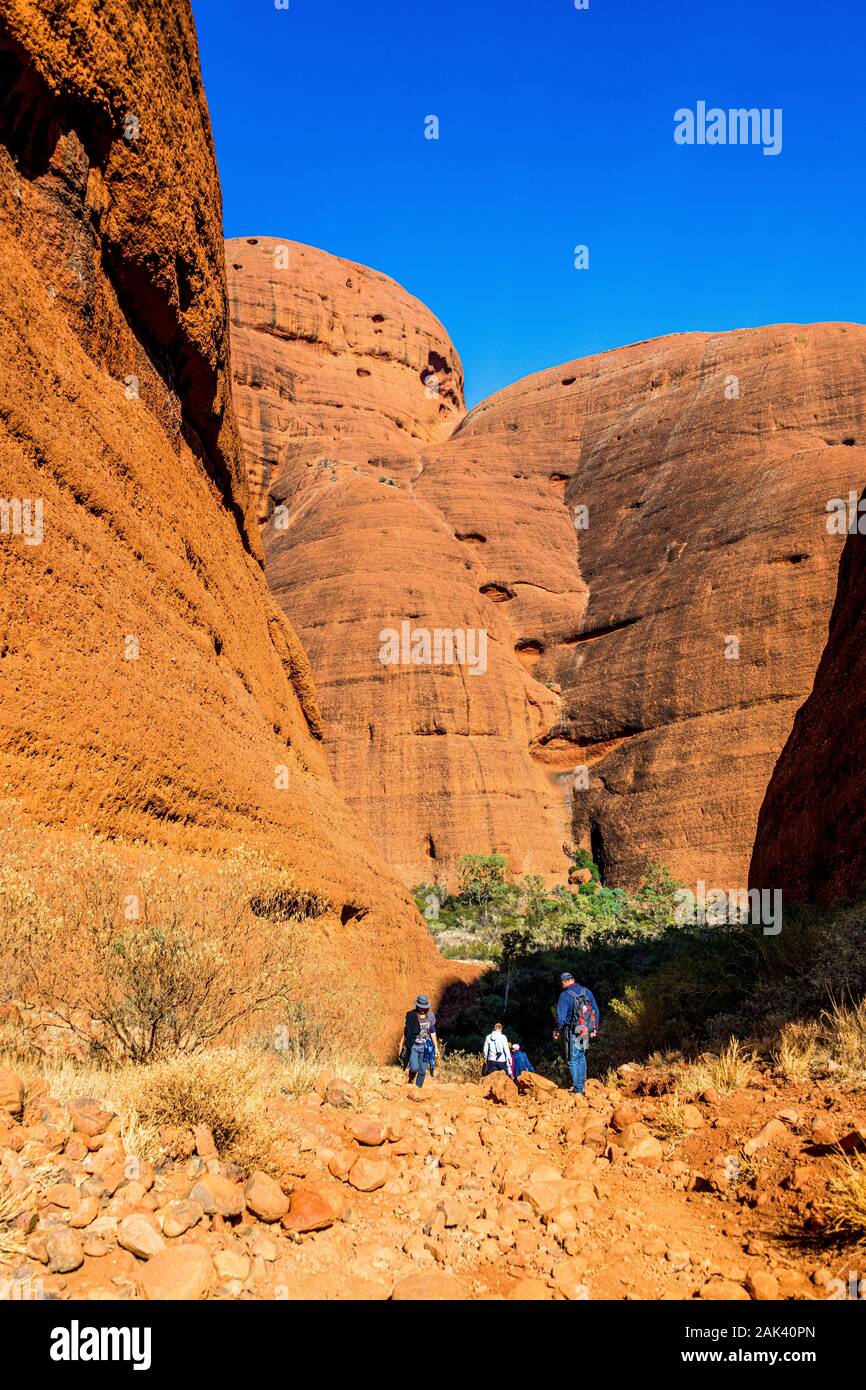
An easier 2.6-kilometre return walk taking about an hour through a narrow gorge between two of Kata Tjuta's tallest domes, ending at a seating area near a non-permanent stream. The gorge shelters native plants and wallaroos rarely seen elsewhere in the surrounding desert.
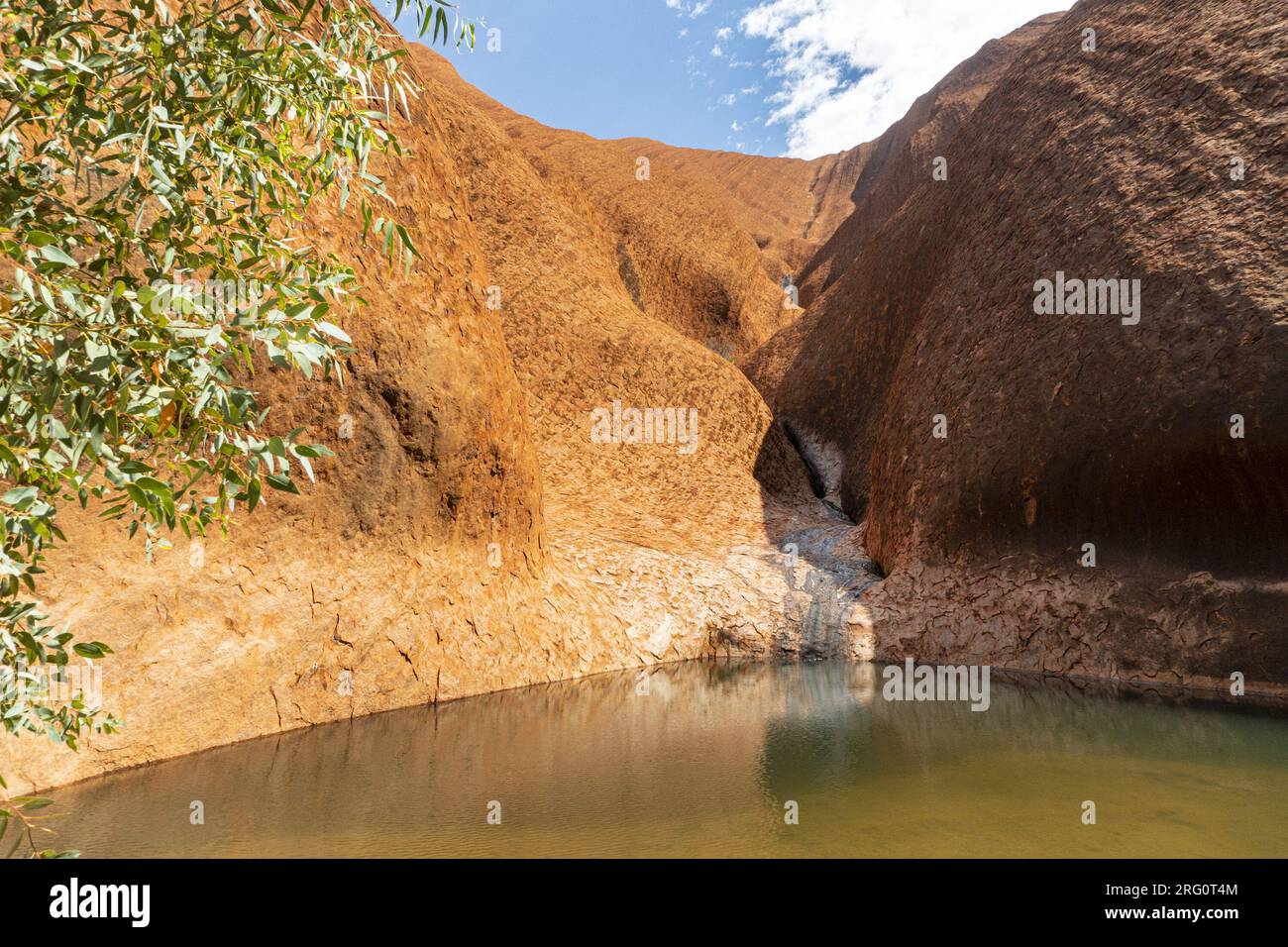
A permanent waterhole at the base of Uluru reached via the Kuniya walk, considered one of the most culturally significant sites in the park and home to ancestral rock art. Photography is restricted in parts of this area out of respect for Anangu culture.
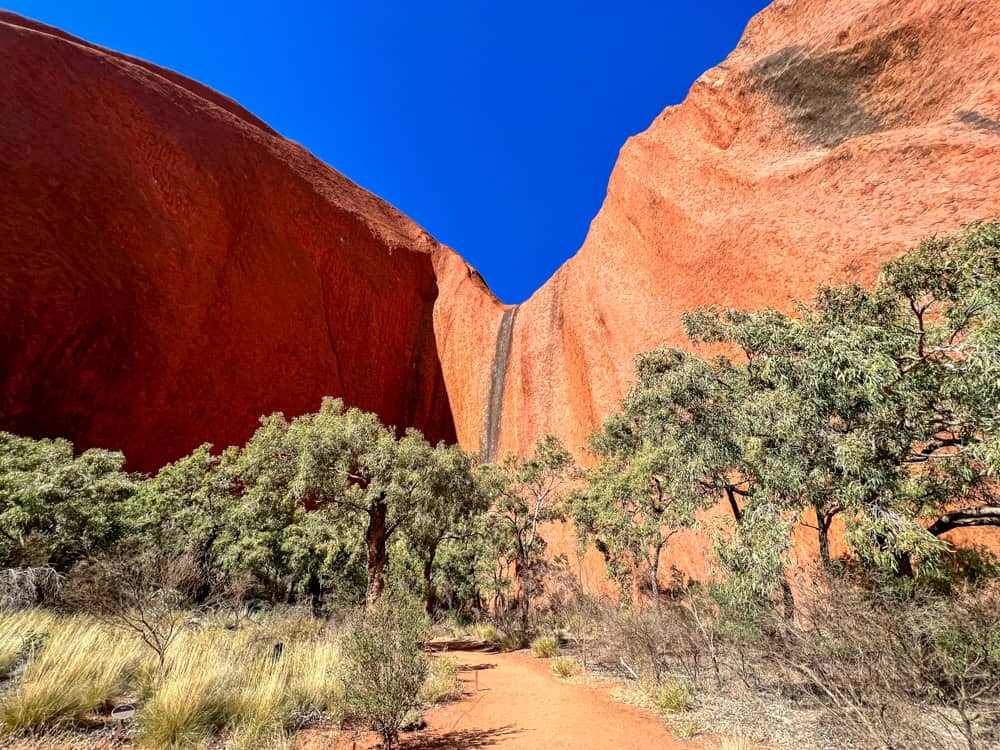
A short detour off the Mala Walk leading to a towering vertical rock wall and rock art site, best seen in early morning light. The gorge is a registered no-photography zone in sections due to its sacred status to the Anangu people.
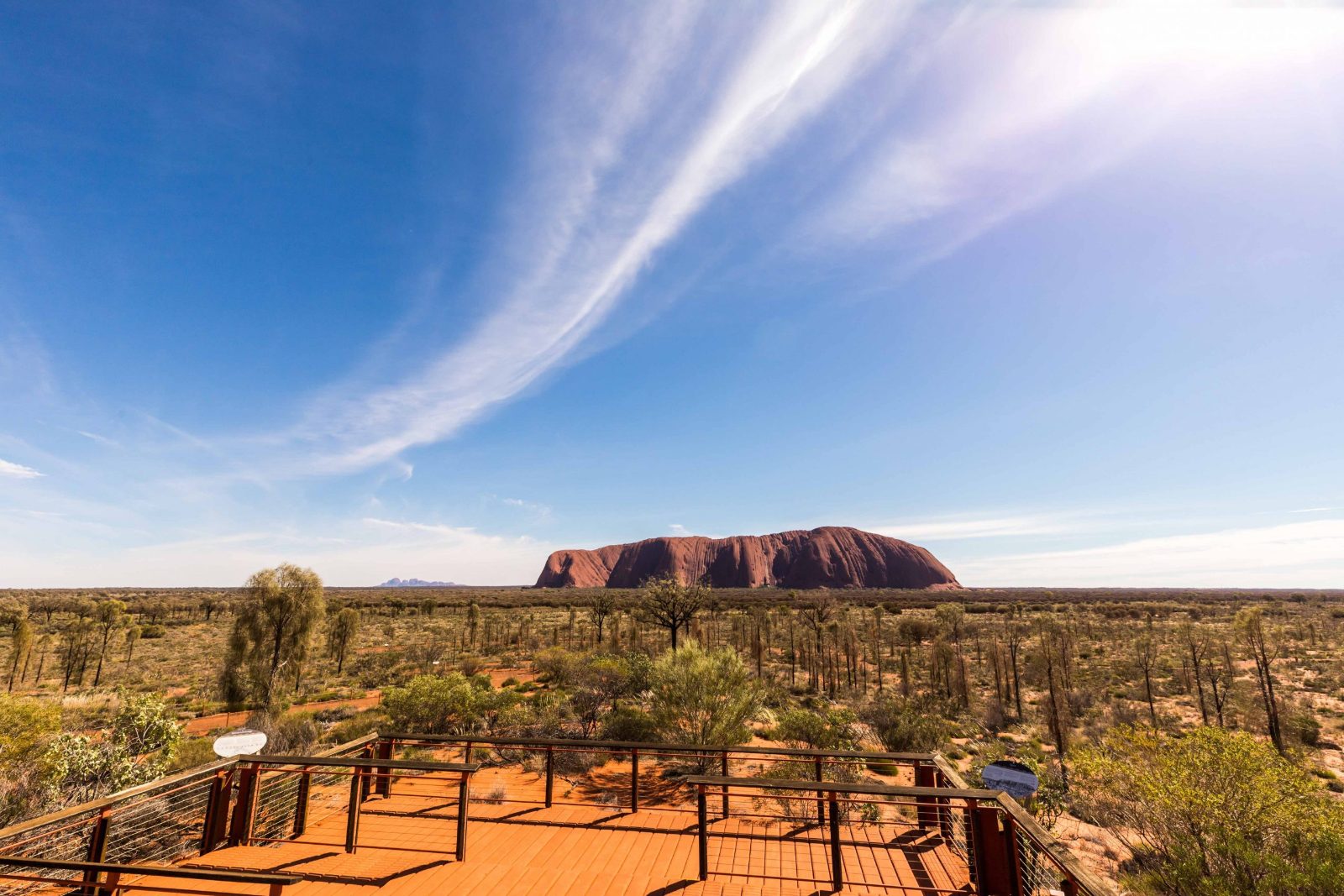
An elevated viewing area roughly 15 minutes from the Cultural Centre offering simultaneous panoramic views of both Uluru and Kata Tjuta from a single platform, popular for sunrise. Its Pitjantjatjara name translates loosely to looking at Uluru and Kata Tjuta from a distant place.
You leave Yulara in the dark. The gates open at 06:30, and the arrival window between 06:30 and 08:30 gives you cooler air and the low, raking light that makes the sandstone legible. You queue briefly at the entry station, present the 38 AUD park pass, and drive on.
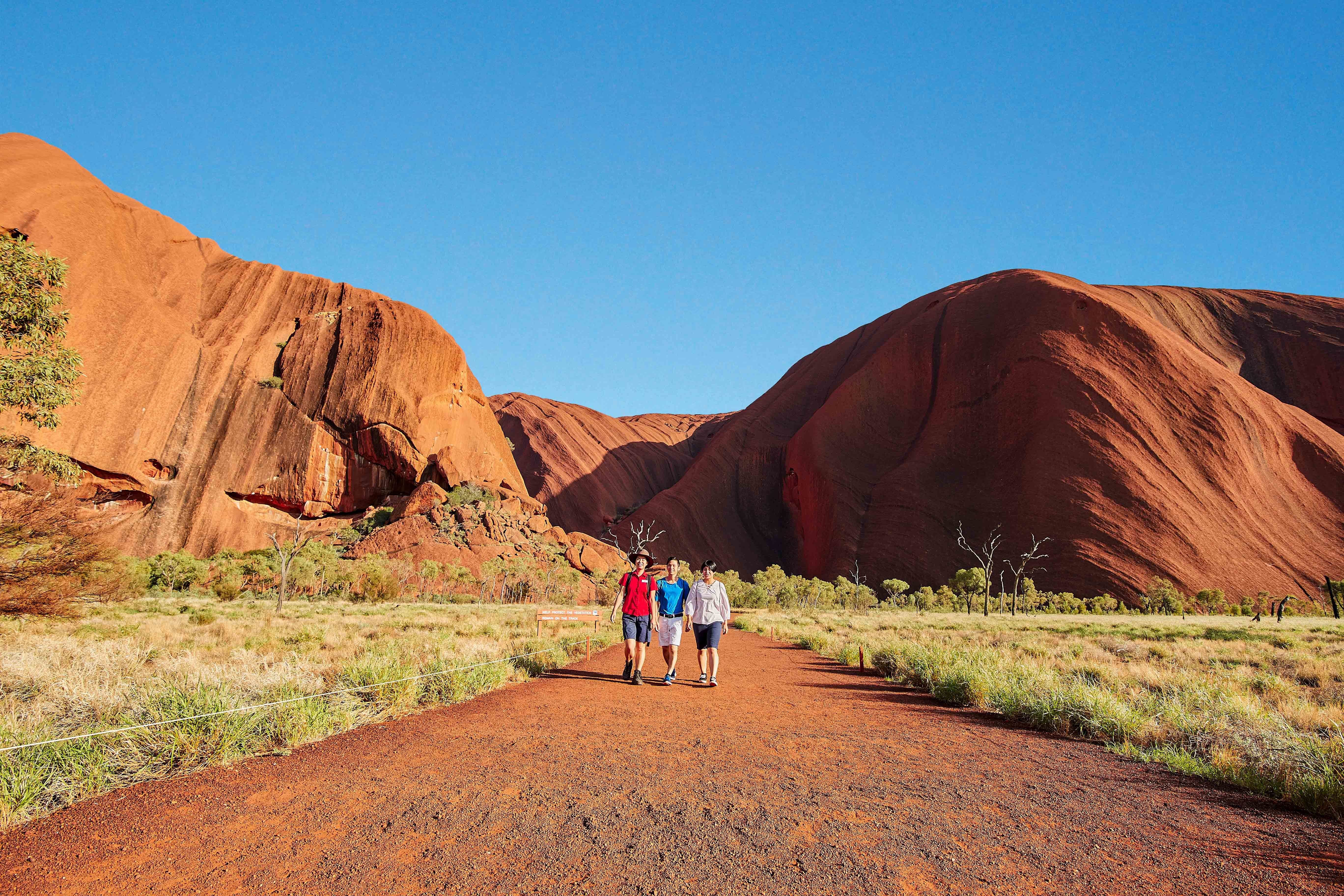
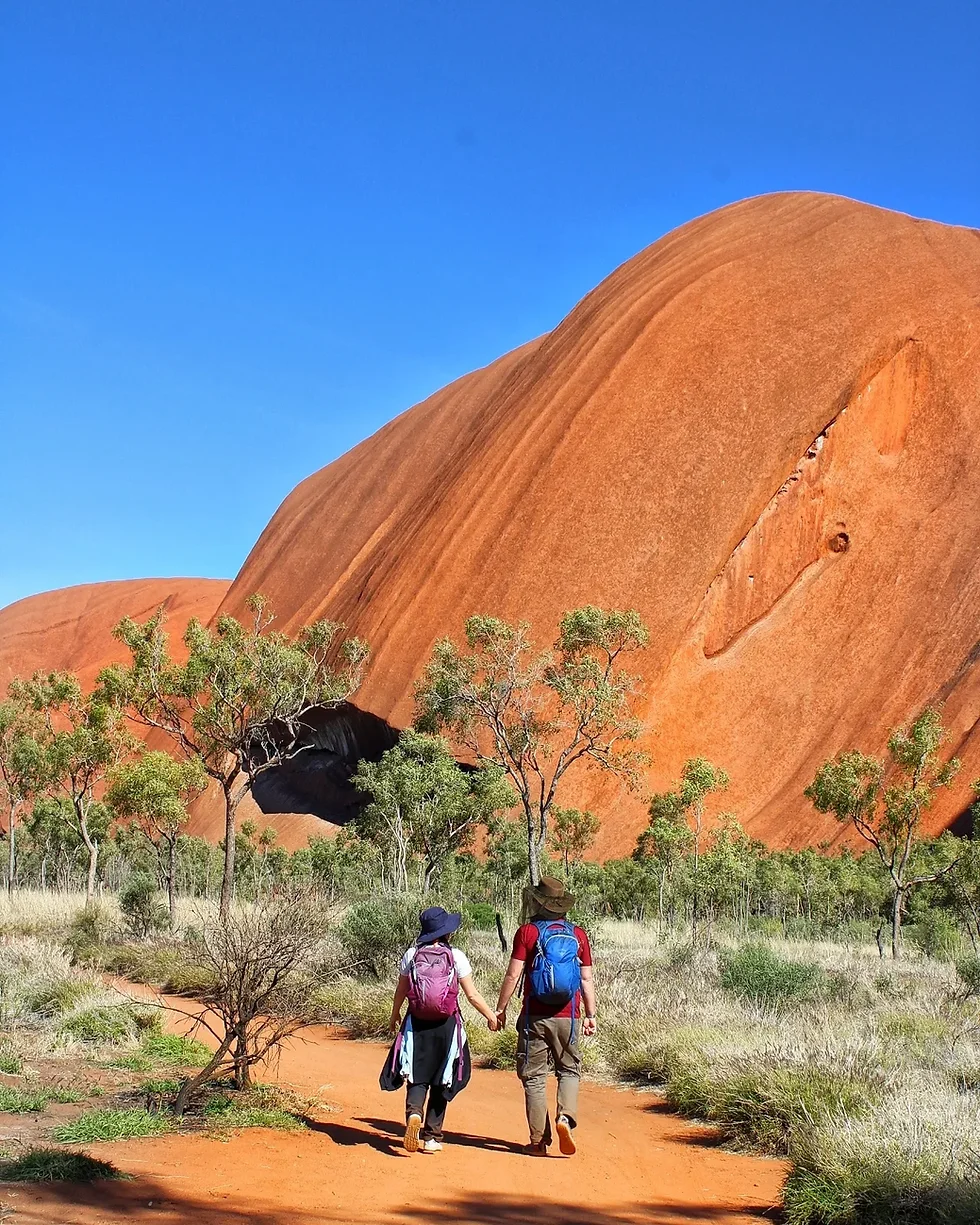
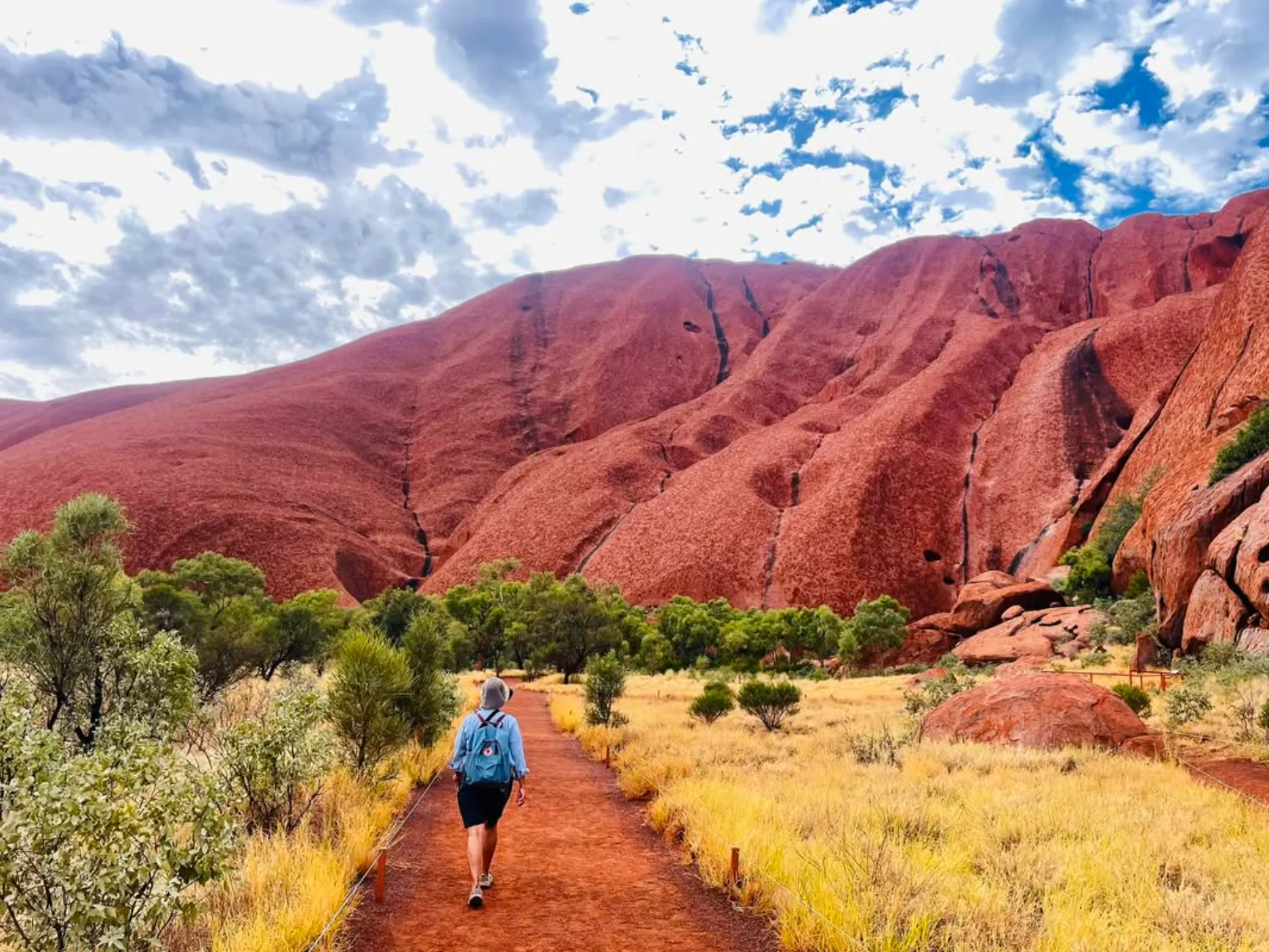
At the sunrise platform you stand with perhaps forty other people, all quiet. The rock goes from grey to plum to orange over roughly twenty minutes. You watch the shadow line retreat down the western flank. Then you walk. The Mala track takes you past the teaching caves, where you tilt your head to read ochre handprints on the overhang. You stop at Kantju Gorge, where the wall closes overhead and the air drops several degrees.
By mid-morning you circle back. If you are using the Uluru hop on hop off bus, you check the timetable board and catch the next service toward the Cultural Centre, where Anangu artists work under a shade structure. You drink more water than you expect to — two litres, minimum. A guided Uluru Tours tour fills in what the signage cannot: which stories are public, which are not.
In the afternoon you rest. At dusk you return for the Field of Light, walking gravel paths between fifty thousand glowing stems until the park closes at 19:30.
All the details about your upcoming adventure in one place
Uluru Tours bring you to the base of the sandstone monolith with Anangu-informed guides who explain Tjukurpa, rock art at Mutitjulu Waterhole, and the desert oak country of Uluru-Kata Tjuta National Park. Most Uluru Tours tours combine the Mala Walk with a viewing platform stop where the arkose sandstone shifts colour, and an Ayers Rock guided tour can be paired with Kata Tjuta's Walpa Gorge on longer itineraries. Booking Uluru Tours tickets in advance secures a place with a licensed operator, and Red Centre landmarks like Kings Canyon sit within reach for travellers extending their stay.
The monolith rises 348 metres above the surrounding plain, yet geologists estimate that some five to six kilometres of arkose sandstone remain buried beneath the sand. What visitors see is the tip of a tilted slab, upended roughly ninety degrees by tectonic folding some 400 million years ago.
The rock sits at the centre of Uluru-Kata Tjuta National Park, on Lasseter Highway in the Northern Territory. Anangu, the traditional owners, have lived across this Country for tens of thousands of years. Title was handed back in 1985 under a joint-management arrangement that remains among Australia's most-cited land agreements. The park entered the UNESCO World Heritage list twice — first for its geology, then, in 1994, for its cultural landscape. Few sites carry a dual listing. Uluru Tours operate within that framework, and guiding here is shaped by Tjukurpa, the body of law, story and relationship that governs how the site is read.
Architecture here is geological. The arkose weathers into distinct features: Mutitjulu Waterhole on the southern face, the ribbed flanks known as Kantju Gorge, and the shallow caves that hold rock art in ochre and charcoal. Colour shifts because iron minerals in the surface oxidise; the red is rust, thin as a coat of paint. Thirty-six kilometres west stand the domes of Kata Tjuta, taller than Uluru at 546 metres, formed from a coarser conglomerate. A Kata Tjuta day tour typically pairs with the base circuit.
Access is structured rather than free-ranging. The 10.6-kilometre base walk traces the perimeter; the Uluru hop on hop off bus links the Cultural Centre, sunrise and sunset viewing platforms, and Kata Tjuta trailheads, and most operators publish a fixed Uluru hop on hop off timetable that runs from park opening. Reading the hop on hop off bus timetable against sunrise is the single most useful piece of planning most visitors do. The park gates open at 06:30 and close at 19:30, seven days a week, and a park pass costs 38 AUD for adults, valid three consecutive days.
After dark, Bruce Munro's Field of Light installation covers an area the size of seven football fields with fifty thousand stemmed spheres, solar-charged and fibre-optic lit. It has been extended repeatedly since 2016. The climb closed permanently in October 2019 at the request of Anangu, and interpretation has since shifted decisively toward walking, listening and looking. Uluru Tours tickets now weight cultural guiding above summit ambition, and the park is better for it.

The red is rust, thin as a coat of paint.
Lightweight, breathable clothing in neutral tones works best across the exposed walking tracks around Uluru and Kata Tjuta. A wide-brim hat and closed, sturdy shoes are recommended for the unpaved sections of any Uluru Tours itinerary, since red sand and loose gravel underfoot can be uneven.
There is no bag-check or metal-detector screening at the park entry station; rangers instead scan the QR code on your park pass at the gate. Day-pack sized bags are fine on all walking tracks, though lockers are not provided at trailheads, so valuables generally stay with you or in your vehicle.
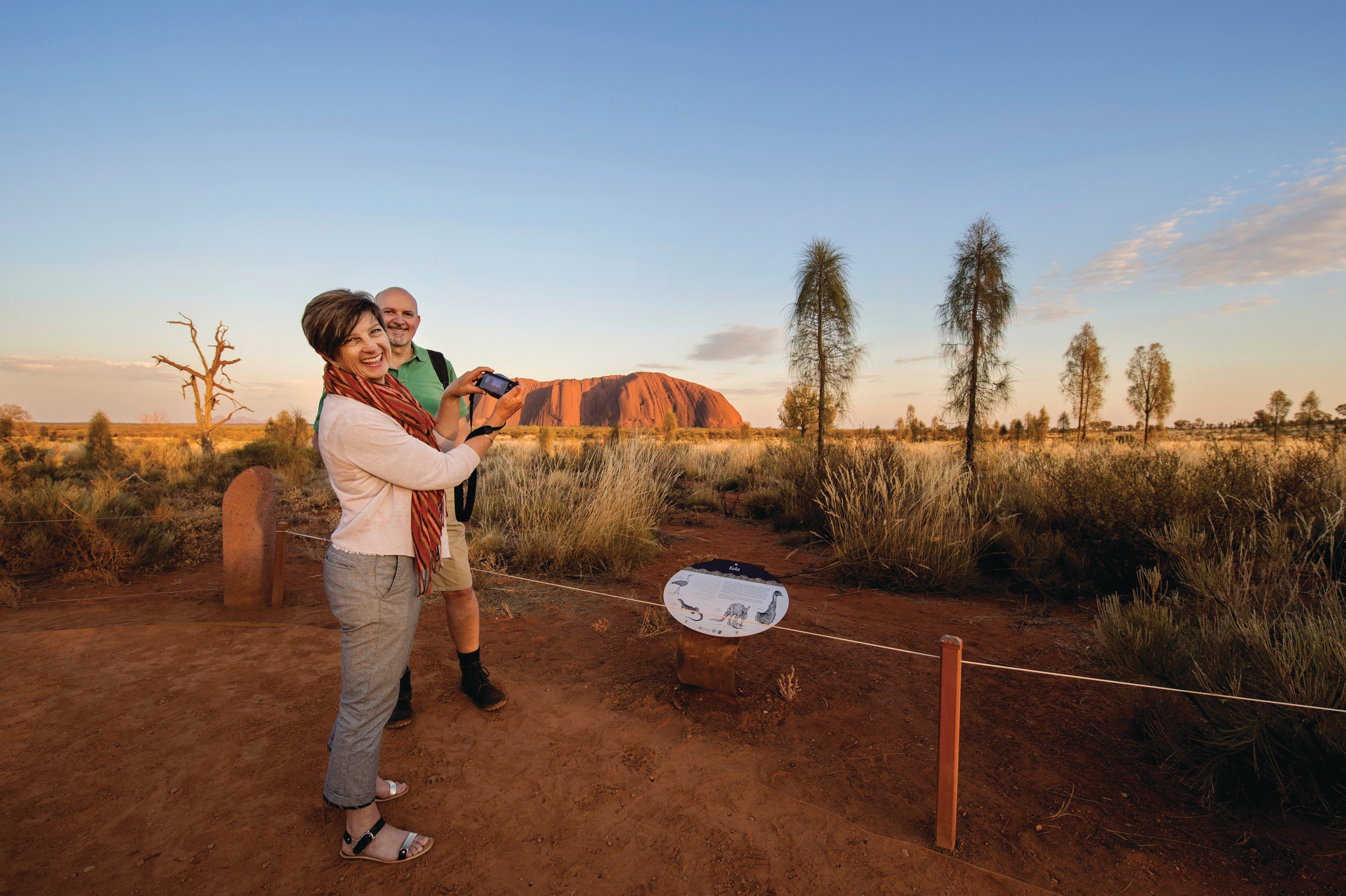
Personal photography and video are permitted throughout most of the park, but several sacred sites around Uluru — including sections near Kantju Gorge and the Mutitjulu Waterhole — are marked with no-photography signage out of respect for Anangu culture. Drone use is prohibited across the entire national park without a specific permit.
Children 17 and under enter free under the park pass, and the Mala Walk's short, flat distance suits younger children well.
The Uluru Base Walk, Cultural Centre boardwalks, and both viewing platforms have wheelchair-accessible sections, while Walpa Gorge and the Valley of the Winds circuit involve rocky, uneven terrain unsuitable for wheelchairs. Accessible parking and toilets are available at the Cultural Centre, Mala carpark, and both sunrise and sunset viewing areas.
There are no cafes or kiosks within the park itself, so most Uluru Tours operators pack morning tea or breakfast as part of sunrise itineraries. Refillable water bottles can be topped up at stations near the Cultural Centre and Mala carpark, and at the Kata Tjuta viewing areas, since the outback climate makes hydration essential year-round.
Ranger walks depart Mala carpark 8am (Oct–Apr)
Opening hours
Daily 06:30–19:30, all week
Opening hours
06:30 – 19:30
Getting there
City-center access via metro and bus
Accessibility
Most experiences are wheelchair-friendly — check individual tours
What to bring
Comfortable shoes, water, phone for mobile voucher
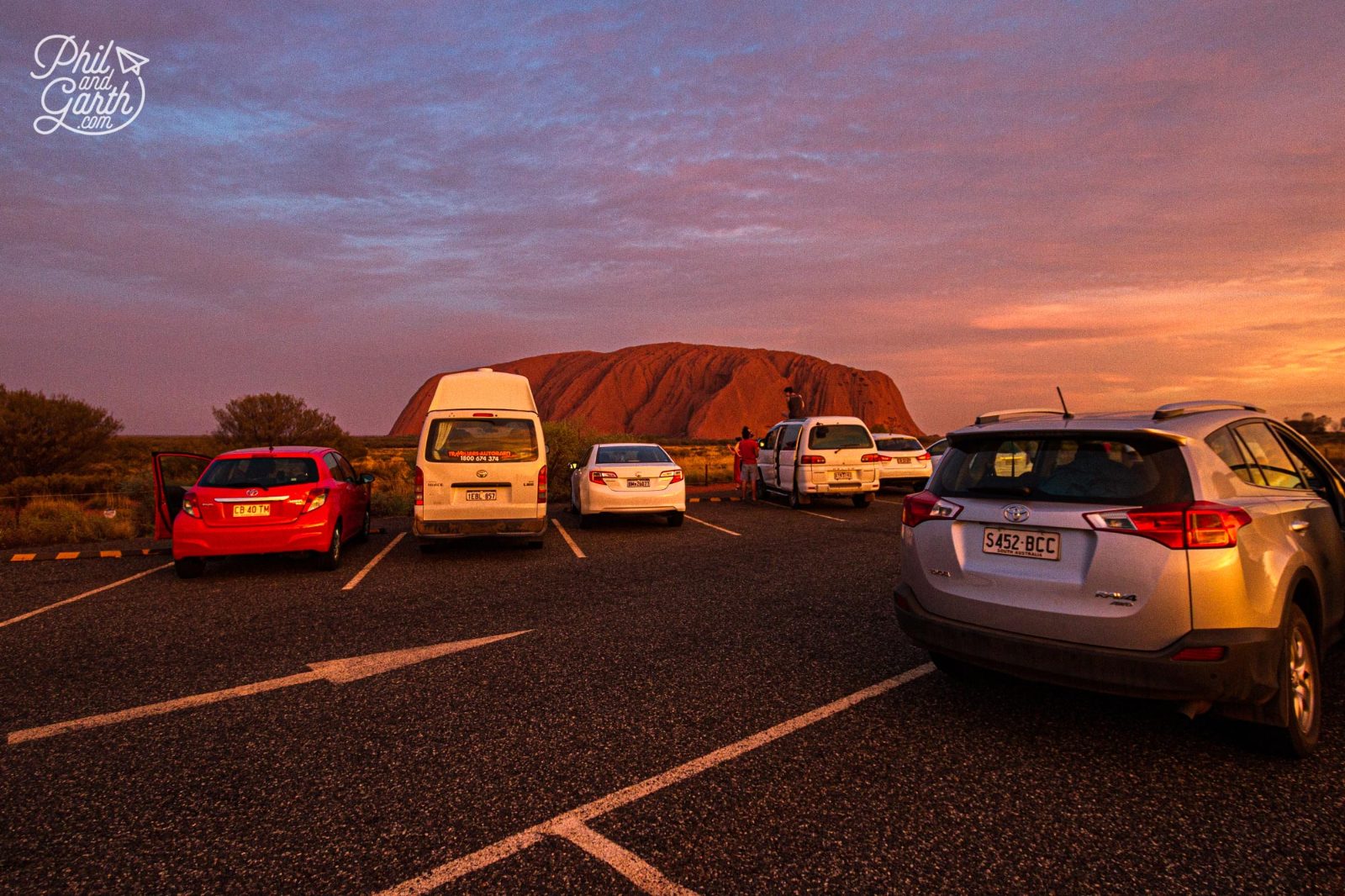
Car · 20 min · Free parking at Cultural Centre, Mala and sunset carparks
Self-drive from Yulara resort along the sealed Lasseter Highway, roughly 20 minutes to the park entry station.
Park passes are non-transferable but most operators running Uluru Tours allow free cancellation up to 24–48 hours before departure, with the 38 AUD adult park pass fee typically non-refundable once issued. Check the specific operator's terms at time of booking, since third-party tour cancellation windows vary.
Recommended time
Half a day
Budget four to five hours to cover a base walk at Uluru plus a Kata Tjuta transfer, since buses run roughly every 50 minutes and Kata Tjuta departures are limited to only a couple of fixed windows a day. Arrive within the 06:30–08:30 window so you catch an early service; missing it can mean a 40-50 minute wait for the next one. If you skip Kata Tjuta and stick to the base walk alone, two to three hours is enough. Booking any Uluru Tours tour in advance and confirming your pick-up time keeps you off the platform waiting on standby seats.
Crowd levels through the day
Weather · crowds · average price — dots go green to amber to red as each metric rises.
Cool days around 20°C and cold nights near freezing make this the most comfortable season for full-length walks, though it is also the busiest period for Uluru Tours with July school holidays drawing crowds.
Pre-purchasing the 38 AUD park pass online via uluru.gov.au lets you scan straight through the left-hand lane at the entry station rather than queueing to buy on arrival.
Uluru-Kata Tjuta National Park, Uluru, NT 0872
Starting point for the free ranger-guided Mala walk and Uluru base walk
Get directionsThe idea predates the desert. In 1992, the British artist Bruce Munro camped near Uluru and sketched a concept in a notebook: a field of stemmed lights that would bloom after dark, mirroring the way dormant seeds flower after rain. He built smaller versions elsewhere first — in his own Wiltshire garden in 2004, then at the Eden Project in Cornwall in 2008. The original site waited more than two decades. Field of Light Uluru opened on 1 April 2016 as a temporary work, scheduled to close in March 2017. Munro installed 50,000 solar-powered stems across an area roughly the size of seven football fields, connected by 380 kilometres of optical fibre. Visitor demand extended it repeatedly. In 2020 Voyages Indigenous Tourism Australia announced the installation would remain indefinitely, and in 2024 the stems were refurbished, with weathered spheres and solar components replaced. Guided Uluru Tours to the site run from the resort at Yulara, since the artwork stands on Anangu land inside a UNESCO World Heritage landscape. The older history is harder. Anangu have occupied this country for tens of thousands of years; the sandstone inselberg is a Tjukurpa site, not scenery. Guided access to the rock itself began commercially in the 1950s, and the chain along the summit route was installed in 1964 after a series of deaths. Traditional owners asked visitors not to climb from the 1990s onward. On 26 October 1985 the Commonwealth returned freehold title to the Anangu, who leased it back for joint management. On 26 October 2019 — thirty-four years to the day — the climb closed permanently, and the chain was removed within weeks. What survives is a shift in emphasis. A modern Uluru Tours tour now centres on base walks, cultural interpretation at the Cultural Centre, and the lit field after sunset rather than the summit. Booking an Anangu-guided Red Centre tour, or securing Uluru Tours tickets in advance, buys access to a story told by its owners. Most Uluru Tours tours depart before dawn.
Bruce Munro camps near Uluru and sketches the initial concept for a desert light field.
A chain handrail is bolted to the summit route after repeated fatalities on the climb.
The Commonwealth returns freehold title to the Anangu on 26 October under a joint-management leaseback.
Munro exhibits an earlier version of the work at the Eden Project in Cornwall.
Field of Light Uluru opens on 1 April as a temporary installation of 50,000 solar stems.
The Uluru climb closes permanently on 26 October and the chain is removed weeks later.
Voyages Indigenous Tourism Australia confirms the artwork will remain indefinitely.
The installation is refurbished, with weathered spheres and solar components replaced.
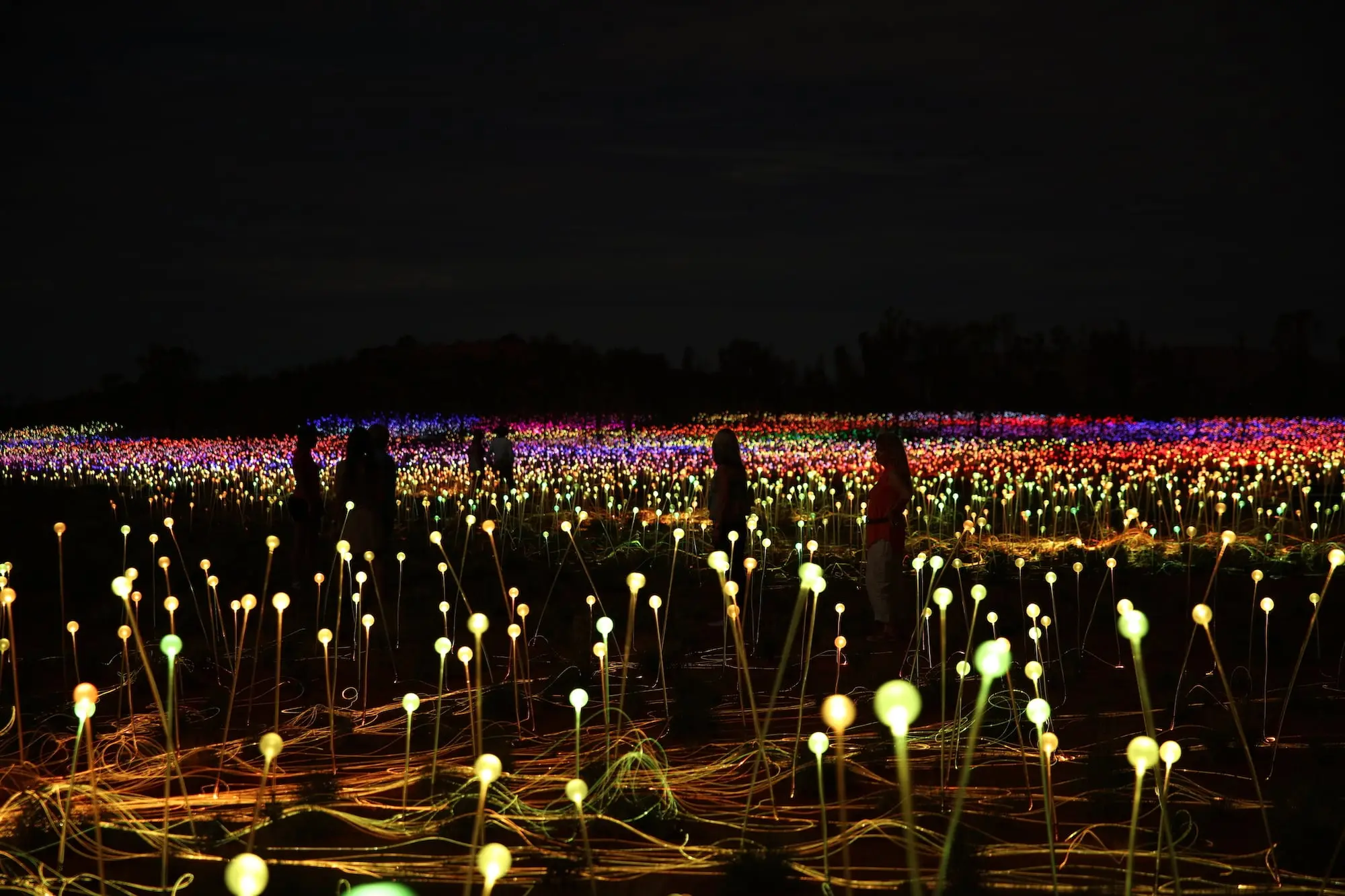
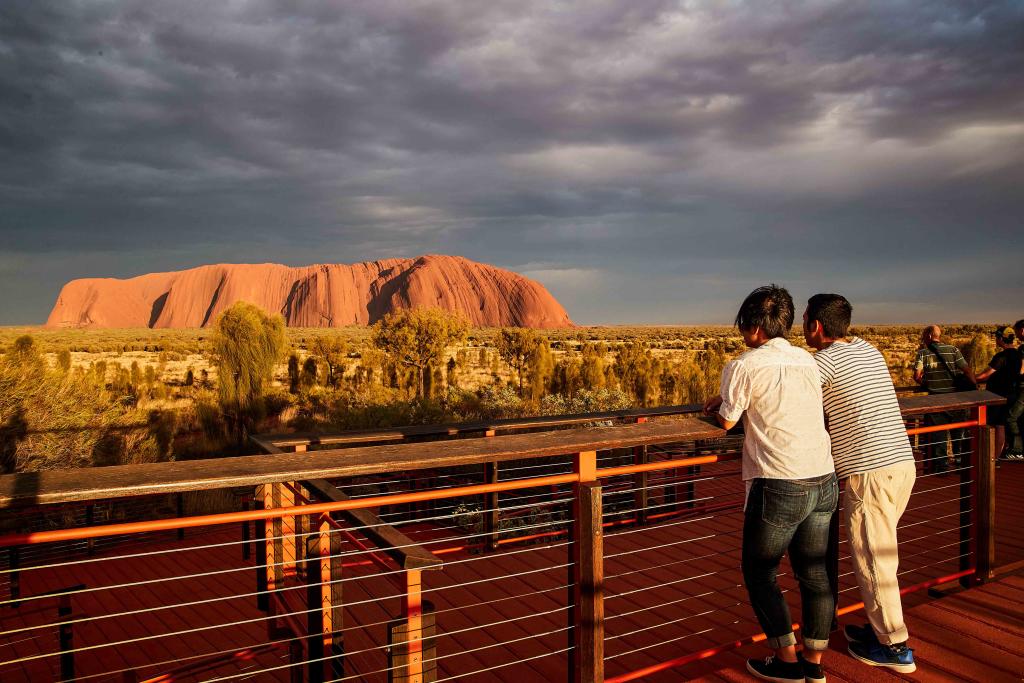
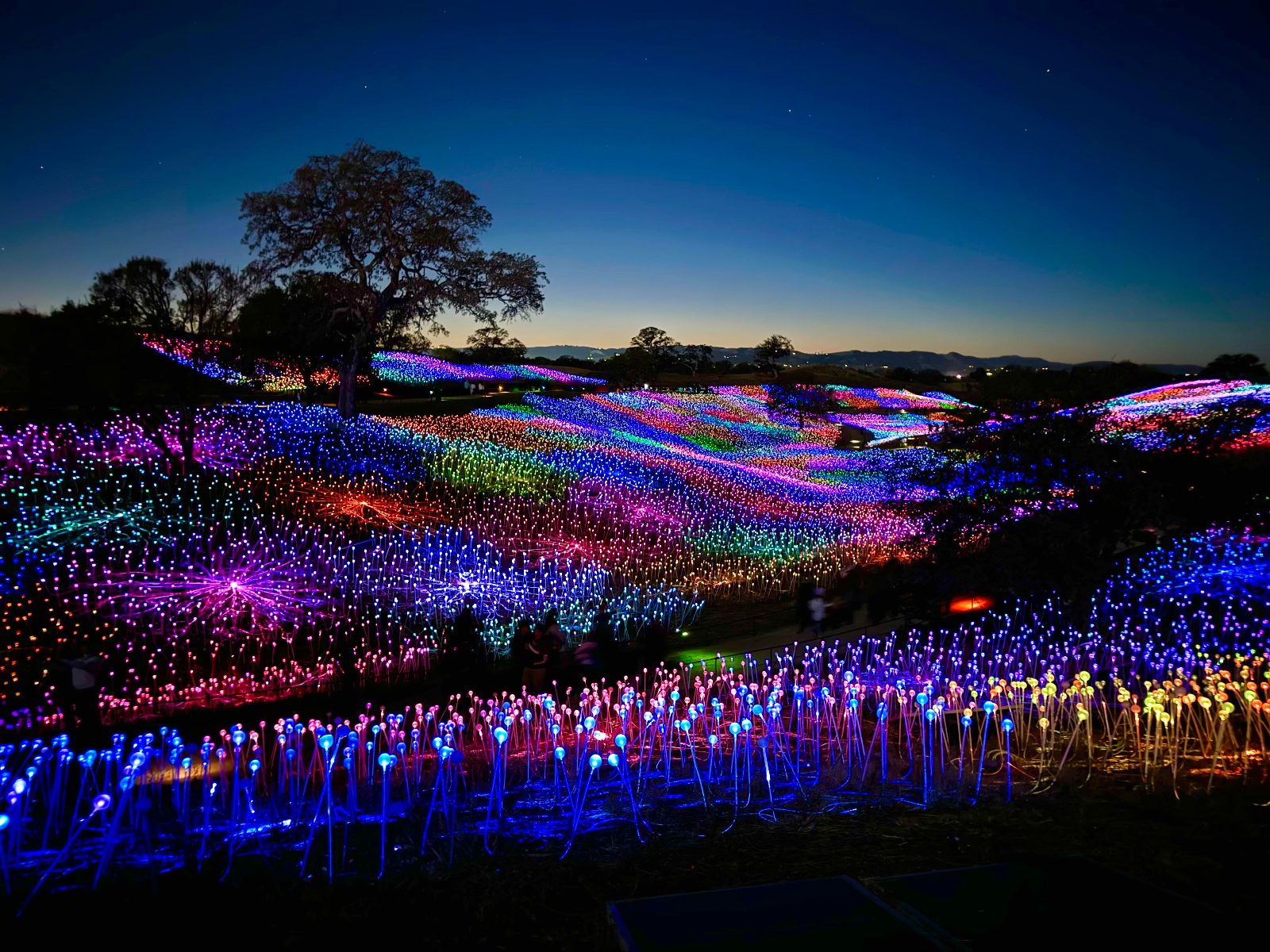
A raised platform sits directly above Bruce Munro's 50,000-globe installation, framing Uluru's silhouette as the last sunlight fades behind the colour-changing spheres below. Stand at the platform rail rather than lower on the walkway for an unobstructed line over the full field, since the ground-level paths block the wide view. Many Uluru Tours itineraries route guests here specifically for this elevated angle.
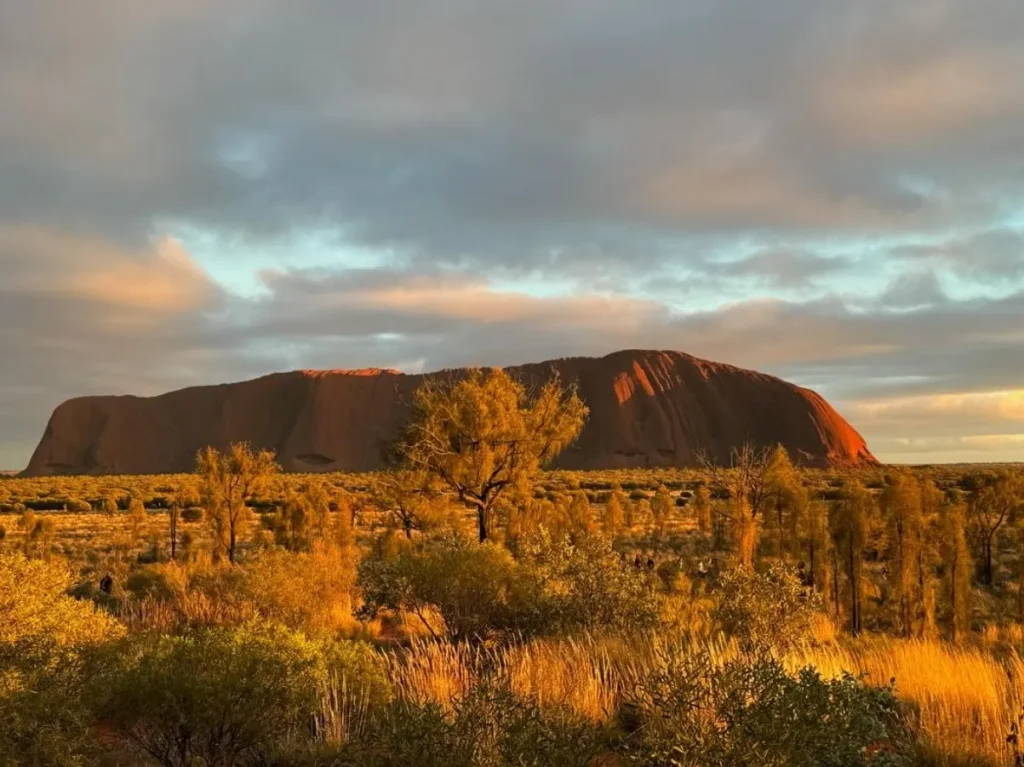
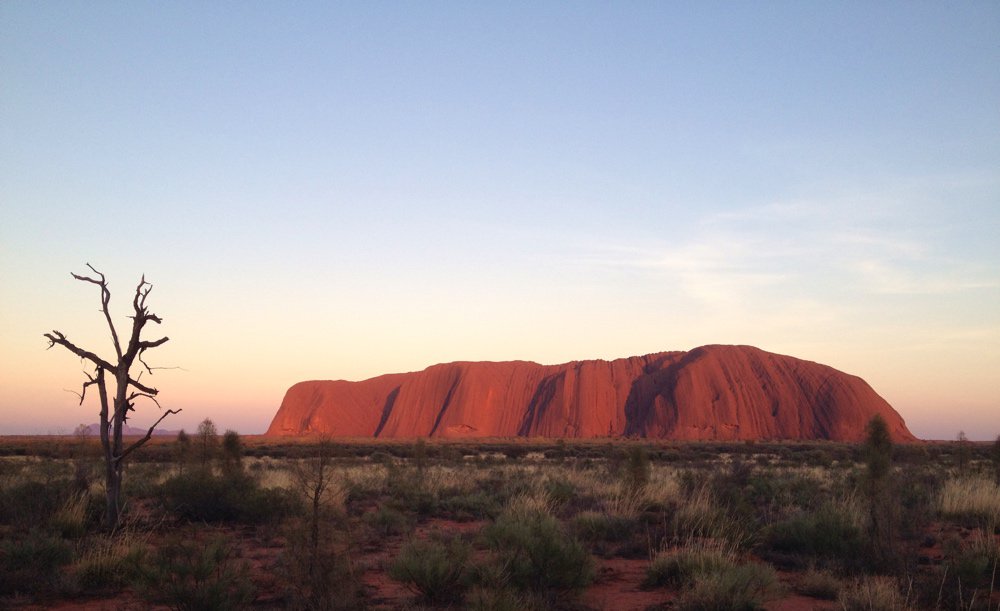
This is the main sunrise viewing area for Uluru, and the second shelter along the lower track gives an uninterrupted composition of the rock with Kata Tjuta visible in the distance. Walk past the first shelter to the second for a cleaner frame, ideally with a foreground tree for depth. Shelters and platforms here can fill up fast, so early arrival secures a clear sightline.
The upper platform gives 360-degree views and captures the full glow spreading across Uluru's sandstone as dawn breaks over the surrounding dune field. This spot suits a wider establishing shot rather than a tight rock portrait, since the horizon and desert scrub fill much of the frame. It is the most visited of the platforms, so tripod space is limited at peak times.
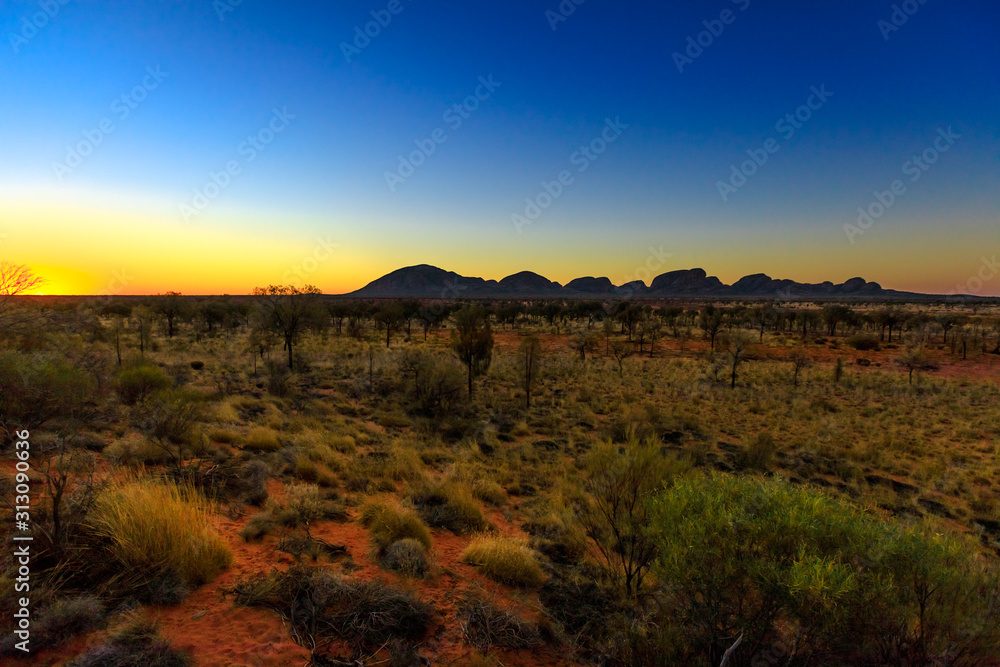
This lookout frames Kata Tjuta's domes with Uluru visible on the horizon, and works for both sunrise silhouettes and the deep shadow-and-light contrast that forms on the domes at sunset. Traditional Owners ask that photographs keep at least three to five domes in frame rather than isolating a single one. It is a stop used on several dune-top lookout routes, including hop-on-hop-off itineraries.
Walking the illuminated pathway between the glass spheres gives close, low-angle shots of the coloured lights without Uluru in frame, useful as a contrast to the wide shot from the raised platform above. Movement through the field is self-guided once the sun has set fully. Tripods are discouraged on the narrow path due to foot traffic.
Uluru Tours by hop on hop off bus work well for families willing to embrace an early start, since sunrise pickups mean waking toddlers before dawn and pacing the rest of the day around a nap. Facilities are limited between stops, so knowing where the toilets are matters more than usual with young kids.
Small bags and collapsible strollers are welcome on board, but large or bulky items are not, so pack light and fold the stroller for boarding.
Children of any age can ride, with infant rates for 0-4 years, but toddlers cope best since the sunrise pickup and long gaps between stops suit kids who can nap on the move.
Toilets exist at the Cultural Centre and Mala Carpark on the Uluru route, but Kata Tjuta has only one toilet site, so use it before setting off on any walk.
Walpa Gorge is a shaded one-hour walk that suits young legs, while Valley of the Winds runs three hours over rougher terrain and is better left for an older-kids Uluru Tours tour or a solo adult outing.
Buses do not serve food, so bring snacks and at least a litre of water per person, more in summer, since the Red Centre heat wears children down quickly between stops.
Real experiences from real travelers
We booked one of the small-group Uluru Tours and were on the dune before five, wrapped in every layer we owned because the desert cold at that hour is real. Watching the rock turn from grey to violet to orange took about forty minutes and nobody in our group said a word through it. Our guide from Anangu country explained the waterstain streaks down the face, which I had assumed were shadows.
Nothing prepares you for the scale until you are walking the base track and the sandstone wall just keeps going. The Mala walk section with the rock overhangs and old cooking hollows was the part I keep thinking about. Air smelled of dust and eucalyptus the whole way.
Our Uluru Tours tour ran from before dawn until well after dark and by the Kata Tjuta stop I was flagging in the heat. That said the Valley of the Winds lookout between the domes was worth the climb over loose rock. Bring more water than you think you need.
Everyone comes for the monolith but the domes of Kata Tjuta were my favourite part of the whole trip. Deep red conglomerate rock, wind funnelling through the gorge, almost nobody else on the trail at that hour. The guide's talk about Tjukurpa stories gave the landscape a different weight.
We paired a sunset viewing with the Field of Light installation and the walk between the glass stems in total silence was the strangest, best hour of our Australia trip. Desert sky above, no light pollution, the Milky Way genuinely visible. Book Uluru Tours tickets well ahead because the evening slots go first.
Booked through the same operator for a camel trek across the dunes and the view of both Uluru and Kata Tjuta from the saddle was better than any lookout. Handler was patient with nervous first-timers. Red sand gets absolutely everywhere, plan your clothes accordingly.
Lived in Sydney thirty years and finally made it out to the Red Centre. The cultural centre visit that came with our Uluru Tours booking answered questions I did not know I had about why people no longer climb. Sunset from the car park viewing area was crowded but the rock does not care.
Went in the shoulder season and it was still well over thirty degrees by mid-morning. Flies were persistent enough that I bought a net hat at Yulara and stopped caring how it looked. The Uluru Tours tours we did included plenty of shade stops which made the difference.
Mutitjulu Waterhole on the shaded southern side felt like a completely different place from the exposed dune country. Cool air, birds, and ochre hand markings on the overhang above. Our guide kept the group small enough that everyone could actually hear him.
The morning half was strong and the base walk section was well paced, but we were hurried through the Kata Tjuta stop to make the sunset slot. Still glad I saw both landmarks in one day. Ask the operator how much time each stop actually gets before you commit.
Everything you need to know for your journey
The park is open daily from 06:30 to 19:30, seven days a week, with the gate closing promptly at 19:30.
Yes, an adult park pass costs 38 AUD and is valid for 3 consecutive days, covering entry to both Uluru and Kata Tjuta; children 17 and under enter free.
Yes, the Uluru Base Walk, Cultural Centre, and main viewing platforms have wheelchair-accessible sections, though Walpa Gorge and the Valley of the Winds involve rocky, uneven terrain.
No metal-detector or bag-check screening exists at the entry station; rangers scan the QR code on your park pass instead.
Photography is generally permitted, but several sacred sites near Kantju Gorge and the Mutitjulu Waterhole are marked as no-photography zones, and drones require a special permit.
Arriving during the 06:30–08:30 window offers cooler temperatures and softer sunrise light, and visiting outside the July school holiday peak reduces crowds on Uluru Tours.
Lightweight, breathable clothing, a wide-brim hat, and sturdy closed shoes are recommended for the unpaved walking tracks around the rock.
There are no cafes inside the park itself, so most Uluru Tours operators include packed breakfasts, and water refill points are available at the Cultural Centre and Mala carpark.
Shuttle buses run several times daily between Ayers Rock Resort in Yulara and the park's main viewing areas and Cultural Centre, taking about 30-40 minutes.
Yes, the Mala Walk's short, flat track suits families well, and children 17 and under receive free park entry.
Most tour operators allow free cancellation 24-48 hours before departure, though the 38 AUD park pass fee is typically non-refundable once purchased.
Kata Tjuta, the Field of Light art installation, the Uluru Cultural Centre, and the Talinguru Nyakunytjaku sunrise viewpoint all pair well with a day at Uluru.
A cluster of 36 conglomerate rock domes rising to 500 metres, higher than Uluru itself, connected by the Walpa Gorge and Valley of the Winds walking tracks.
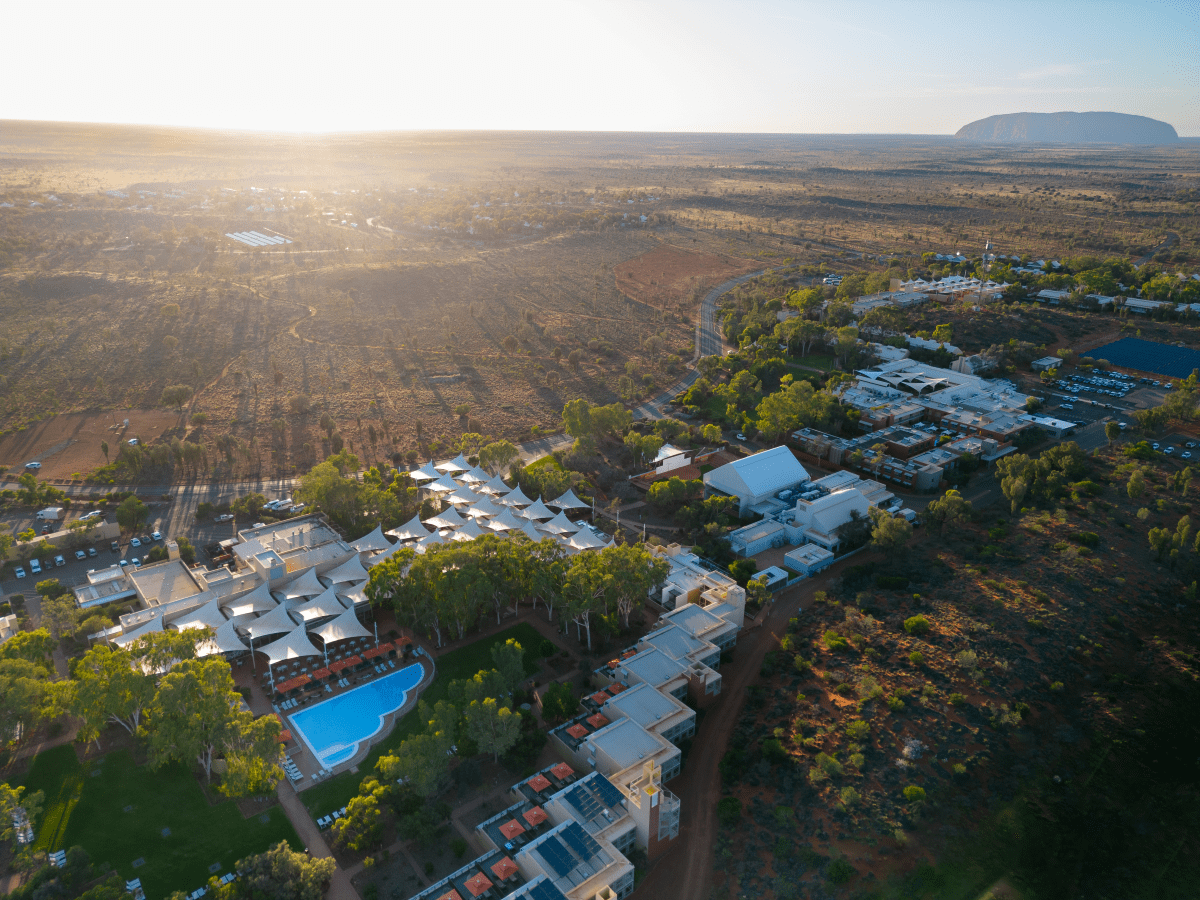
Upscale resort hotel within Yulara featuring a pool, day spa, and desert gardens.
Join thousands of happy travelers who have discovered this incredible experience
Book Your Experience Now